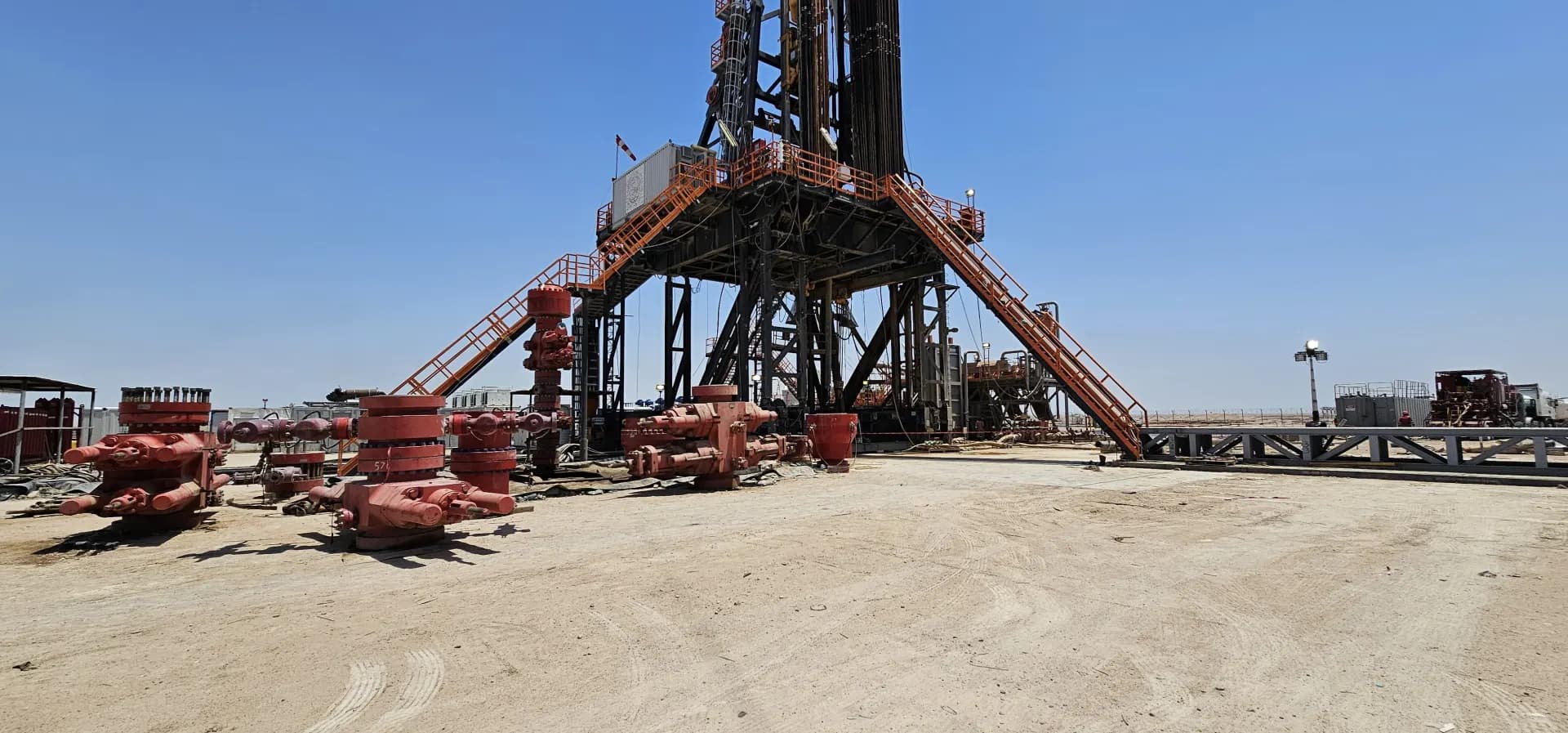
Browse well-control and pressure-control equipment available for drilling, workover and well-intervention operations. Listings may include blowout preventers, choke and kill equipment, BOP control units, diverter systems, wellheads, Christmas trees, pressure-testing equipment and intervention pressure-control equipment.
Review available new, unused surplus, used and refurbished equipment, or submit an RFQ if the required specification is not currently listed.
Browse well-control equipment
BOP stacks, annular preventers, ram preventers, drilling spools, adapters and BOP-specific parts.
Choke and kill manifolds, drilling chokes, control units, valves and associated high-pressure piping.
Accumulator units, remote-control panels, accumulator bottles and hydraulic-control components. Also searched as “Koomey units.”
Diverter annulars, diverter valves, vent-line equipment and control systems.
Casing heads, tubing heads, hangers, sealing assemblies, tree assemblies and associated valves.
Pressure-test pumps, test manifolds, test plugs, chart recorders and pressure-verification equipment.
Lubricators, stuffing boxes, grease-injection heads, tool traps, wireline valves and intervention BOPs.
Well-control equipment that doesn't fall under a specific category above.
Well-control equipment as an integrated system
Well-control equipment provides the pressure barriers, controlled flow paths and operating functions required to detect, shut in, circulate and manage an influx during drilling and other well operations.
A BOP stack cannot be evaluated only by its bore size and working pressure. Its suitability also depends on the well design, casing programme, maximum anticipated surface pressure, expected well fluids, tubular sizes, required hang-off and shearing capability, connection requirements, control-system capacity, choke and kill arrangement, rig type and applicable technical requirements.
There is no universal BOP configuration suitable for every well. The required stack arrangement, ram types, pressure ratings and control functions should be defined through the well-control philosophy and verified against the planned operations.
- well design and casing programme
- maximum anticipated surface pressure
- expected fluids and sour-service conditions
- drilling-fluid properties
- tubular and tool-joint dimensions
- hang-off and shearing requirements
- connection sizes, types and ratings
- BOP control-system capacity and response
- choke and kill line arrangement
- surface or subsea application
- regulatory and operator requirements
Main types of blowout preventers
Annular blowout preventers
An annular BOP uses a reinforced elastomeric packing element to close around a range of tubular sizes and shapes within its qualified operating limits. Depending on the design and operating limits, it may also close on an open hole.
- nominal bore size
- rated working pressure
- packing-element type and condition
- temperature and fluid compatibility
- stripping requirements
- opening and closing volumes
- connection type
- dimensional compatibility with the stack
Fixed-bore pipe rams
Fixed-bore pipe rams seal around a specified tubular outside diameter.
- exact pipe outside diameter
- ram-block and BOP-body compatibility
- packer and top-seal condition
- working pressure
- locking arrangement
- hang-off capacity where required
- availability of replacement elastomers and parts
Variable-bore rams
Variable-bore rams seal over a defined diameter range, but cannot be assumed to seal around every tubular passing through the BOP.
- minimum and maximum sealing diameter
- operating pressure across the range
- tubular geometry and upset dimensions
- stripping or hang-off requirements
- elastomer compatibility
Blind rams
Blind rams close and seal when the bore is clear. Blind rams are not shearing rams unless specifically designed and qualified for that function.
Blind-shear rams
Blind-shear rams are intended to shear specified tubulars and provide a pressure seal after shearing. Evaluating shearing capability requires:
- tubular outside diameter
- wall thickness and grade
- tool-joint and upset dimensions
- actual shear area
- blade type and condition
- available closing force
- operating pressure
- supporting calculations or test evidence
- post-shear sealing capability
- pipe position at the expected shearing point
Casing-shear rams
Casing-shear rams are designed primarily to shear larger or heavier tubulars and may require a separate ram to provide the subsequent pressure seal.
Specialized ram assemblies
- stripping rams
- test rams
- hang-off rams
- slip rams
- tandem shear rams
- application-specific intervention rams
Functions and operating limits must be confirmed from manufacturer documentation.
Understanding BOP stack configurations
Surface stacks
A surface BOP stack may combine:
- annular preventers
- ram-type BOPs
- pipe or variable-bore rams
- blind-shear or casing-shear rams
- drilling spools
- choke and kill outlets
- connectors, adapters and transition spools
Subsea systems
A subsea system may additionally include:
- lower BOP stack
- lower marine riser package
- hydraulic connectors
- subsea control pods
- subsea accumulators
- emergency-disconnect functions
- marine-riser interfaces
- ROV intervention functions
Questions worth working through before specifying a stack:
- Which tubulars must each ram close around?
- Which components must hang off the drill string?
- Which tubulars must the shear rams cut?
- Is a sealing function available after shearing?
- Can the stack accommodate the planned casing and completion operations?
- Are choke and kill outlets positioned appropriately?
- Does the stack fit the rig's available height and load envelope?
- Is the control-system capacity sufficient for the required functions?
- Can the equipment be tested and maintained efficiently?
Choke and kill equipment
Choke and kill equipment provides controlled flow into and out of the well during circulation and pressure-control operations. It typically includes:
- adjustable and fixed drilling chokes
- choke manifolds
- choke-control panels
- buffer chambers
- kill manifolds
- rigid high-pressure piping
- flexible choke and kill lines
- gate and check valves
- gauges and transmitters
- flanges, hubs and end connectors
Selection factors include pressure rating, bore and line size, configuration, temperature, material class, sour-service compatibility, erosion exposure, choke type, control method, flexible-line service level and end connections.
BOP control units
The BOP control unit supplies, stores and controls hydraulic energy for the stack and associated valves — also referred to as a Koomey unit.
- total and usable accumulator volume
- accumulator pre-charge and bottle condition
- pump capacity and redundancy
- electric and pneumatic pump arrangements
- control-system working pressure
- required functions and operating volumes
- local and remote panels
- response-time requirements
- alarms and monitoring
- surface or subsea application
Diverter systems and rotating control devices
Diverter systems
Diverter systems are generally intended to divert shallow formation flow away from the rig rather than shut in and contain full well pressure. Systems include annular diverter elements, vent lines, overboard valves, flowline valves and sequencing controls.
Rotating control devices
Rotating control devices (RCDs) are used in managed-pressure, underbalanced and other closed-loop drilling operations. Evaluation covers static and dynamic ratings, rotational speed, tubular sizes, bearing assembly, sealing element, temperature, drilling-fluid compatibility and service history.
Wellhead and Christmas tree selection
The wellhead supports and suspends casing and tubing strings, seals annuli and provides pressure-containing interfaces during construction and production. It typically comprises casing head housings, casing spools, casing hangers, pack-offs and secondary seals, tubing heads, tubing hangers, adapters and spacer spools, valves and access outlets, and Christmas tree assemblies.
Casing programme and loads
Casing sizes, weights, connections, suspended loads, pressure loads and external mechanical loads.
Pressure and temperature
The capacity of the complete assembly is limited by its components and interfaces, not only the main housing rating.
Material and fluid compatibility
Hydrogen sulphide, carbon dioxide, chlorides, temperature and other corrosive or embrittling conditions.
Product Specification Level and performance requirements
The required API 6A Product Specification Level and applicable performance-validation requirements must be defined from the application and purchaser requirements — the highest level is not automatically the correct engineering decision.
Connections and compatibility
Flange or hub size, pressure rating, ring gasket, casing/tubing connection, lockdown arrangement, sealing system, BOP interface, tree interface and required adapters.
Installation method
Conventional spool, compact/unitized, slip-on, threaded, weld-on and mandrel-hanger arrangements, together with onshore, offshore and subsea considerations.
Christmas tree configuration
Production or injection service, pressure and temperature, single or dual completion, tubing-hanger arrangement, flowline orientation, intervention access, manual or actuated valves, safety-system requirements and monitoring or chemical-injection interfaces.
Relevant API standards
| Standard | Principal relevance |
|---|---|
| API Specification 16A | Drill-through equipment, including ram and annular BOPs, drilling spools, adapters, connectors and associated components |
| API Specification 16C | Choke and kill equipment, including drilling chokes, controls, manifolds and rigid or flexible lines |
| API Specification 16D | Control systems for drilling well-control equipment and diverter equipment |
| API Standard 53 | BOP equipment systems used in drilling wells |
| API Standard 64 | Diverter equipment systems |
| API Specification 16RCD | Rotating control devices |
| API Specification 16B | Coiled-tubing, snubbing and wireline well-intervention equipment |
| API Standard 16AR | Repair and remanufacture of drill-through equipment |
| API Specification 6A | Wellhead and Christmas tree equipment |
| API Standard 6AR | Repair and remanufacture of wellhead and tree equipment |
| API Specification 17D | Subsea wellhead and tree equipment |
| API Specification 16F | Marine drilling-riser equipment and associated interfaces |
Evaluating used, surplus or refurbished equipment
Available equipment can reduce procurement lead time, but its configuration, condition and documentation must be assessed against the intended service.
Looking for specific well-control equipment?
Submit the required equipment type, configuration, ratings, documentation and delivery schedule. We will review your requirements against available and incoming inventory.
What to include
- intended operation
- surface or subsea application
- nominal bore size
- working pressure and temperature range
- expected well fluids
- sour-service requirements
- applicable API or other standards
- required BOP stack configuration
- pipe and ram sizes
- required shear capability
- connection sizes and types
- control-system requirements
- certification and documentation requirements
- acceptable equipment condition
- inspection or recertification requirements
- operating country and location
- required delivery date
Need help evaluating the equipment?
WELLENGI can support technical-requirement definition, equipment comparison, BOP stack review, preliminary shear-capability review, wellhead compatibility review, documentation assessment, inspection-scope development and technical bid evaluation.
Final equipment acceptance remains subject to the applicable engineering assurance, inspection, testing and operator-approval process.
Request engineering support →Have surplus well-control equipment?
Make idle or surplus equipment visible to buyers looking for available well-control and pressure-control equipment. Provide the manufacturer, model, serial number, ratings, configuration, condition, location and available technical documentation to begin the listing process.
List equipment →